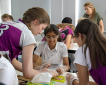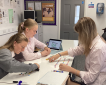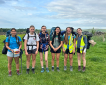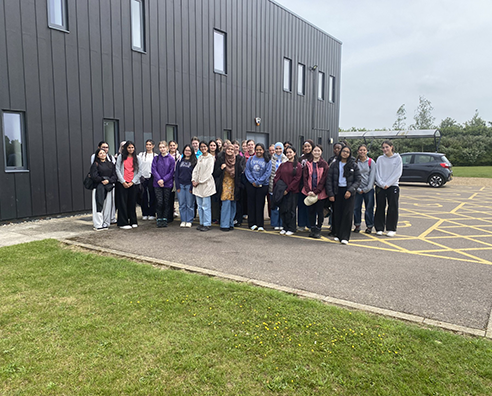
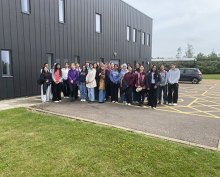
On Monday, our Lower Sixth Biology students took their ecological studies beyond the classroom with a fieldwork trip to Cople Fields, where they applied sampling techniques in a real-world setting to investigate how plant populations vary across different habitats.
Hania T (Lower Sixth) reflected: “Monday's biology fieldwork kicked off with a recap of ecological sampling methods and some careful planning, before a site tour helped us identify the most promising spots for our investigations. With locations scouted and hypotheses formed, my group decided to look at how the growth of perennial ryegrass varies with different light intensities.
“Soon enough we got to work measuring variables and recording data. This did involve a lot more crouching in wet grass and getting hair caught in trees than I would have liked, but it was good fun since we were able to apply the skills we’d learnt in the classroom to a real-life investigation. Aside from the plants, crawling around in the undergrowth allowed us to see all sorts of interesting insects, the highlights of which were a pretty dragonfly and a friendly shieldbug we named Sally.
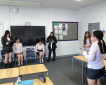
“Once back indoors, we turned our attention to data analysis, working through the many pages of results we'd gathered out in the field. Finally, a set of ice lollies rounded off what turned out to be a thoroughly productive, if slightly soggy, day.
“I found the day to be a really great opportunity to learn more about ecology and enjoyed being able to work in small groups. This was because there were aspects of the day which catered to each person’s strengths, which taught us about the importance of collaboration in science.”