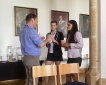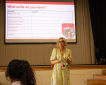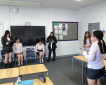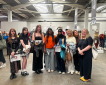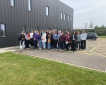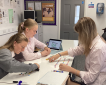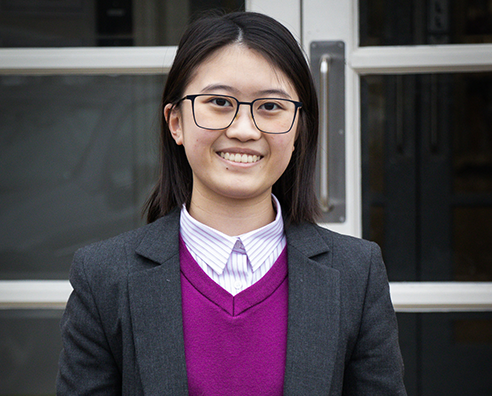
The Psychology Society recently led a fascinating series of workshops giving students from Year 9 to Lower Sixth the opportunity to experience what it's like to be a psychologist. The project involved recreating a classic experiment on social influence, originally by psychologist Jenness in 1932, with sessions designed and led by Veronica Poon (Upper Sixth). Younger students were encouraged to think critically, work collaboratively and apply their learning in a real research setting.
Veronica reflected: “The activity was part of the Psychology Society's aim of spreading awareness of the subject. As a team, we developed the idea together. I coordinated the planning and prepared the materials, while the other leaders supported with presenting during the first session.
The first session started on Wednesday 21st January. It was highly interactive and introduced students to the concept of Informational Social Influence (when people change their opinions because they believe others know better in uncertain situations). Year 12 students shared knowledge on forming hypotheses and research ethics, ensuring we followed the British Psychological Society's guidelines. The only ethical issue was deception (withholding full details initially so participants don't change their behaviour), which was managed by full debriefs. Later sessions covered informed consent forms, which were signed by participants before the experiment to ensure they fully understood their rights, and allowed students to create their results tables.
Simplified Procedure:
- Asking participants to estimate individually the number of jellybeans in a jar.
- Bringing groups together to form a shared estimate.
- Separating participants and asking them to make a second individual estimate.
Students enthusiastically collected data around school. In the last session, the difference between the participant’s first individual estimates and second individual estimates was analysed. The higher the difference, the more Informational Social Influence was shown, as it suggests they’ve been affected by the groups estimate and changed their answer to fit the answer of the group.
The results the students gathered mirrored Jenness' findings, showing that social influence persists. However, our average change, 181 units, was smaller than his 382 units. Possible reasons included smaller jars or varied participants, as his participants consisted of psychology students only while ours had a mix of students and teachers.
Some participants resisted the pressure to conform, allowing us to explore Locus of Control, a theory developed by Rotter to decide how much control people feel over their actions. Rotter stated that “Externals” (influenced by outside factors) conform more than “Internals”, so our participants that had the same first and second individual estimates might have had an “Internal Locus of Control”.
Showing social influence is perfectly normal as we often seek guidance from others when unsure. It was an honour hosting this event and the student engagement made it an incredibly rewarding experience. We hope this event has helped students gain insight into how psychologists conduct research and has inspired future psychologists.