By Mrs Harrold (Head of Psychology)
In Sixth Form, we know that giving students the skills to consolidate their learning independently is a key part of their academic success, which is why lesson time has been given over to allow our Lower Sixth Psychologists to practise 'blurting' this week. 'Blurting' is a revision technique which has gone viral over the last few years. Based on the well-accepted and peer-reviewed principle of 'active recall', blurting involves students recreating their notes from memory - without even having access to flash cards or questions to act as external cues.
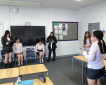
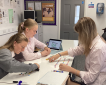
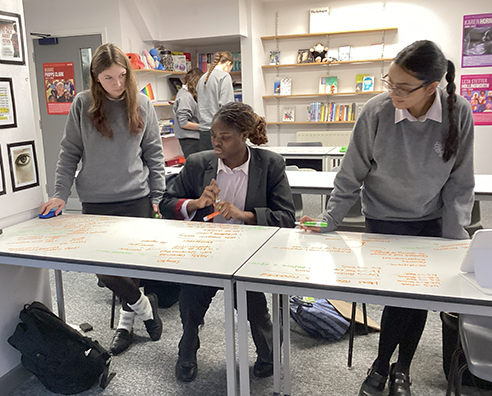
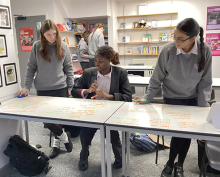
In Psychology, for the learning of the technical term and contextual detail-heavy study covered in this lesson, we also introduced the idea of building the initial content around a structure that helps access specific information for particular types of questions. So, we built our own 'meaningful' mental cues into the blurting process to increase its efficacy still further. We started by the students using their notes and our white-board desks to create their own spider diagrams on Pavlov's famous classical conditioning studies, splitting the material into: how the research was conducted, what the research found, and strengths and weaknesses.
Safe in the knowledge they had accurate notes, the students then took a photo of their diagram, erased it and tried to recreate it from scratch. When they got stuck, they could use their photograph to add the remaining details - in a different colour, so they could see easily what material they still had to add... and then they erased this and went through the process again, and again and again. When the students could recreate the whole diagram without having to add any additional material in a different colour, they knew they had mastered the first stage of blurting.
Of course, part of their homework was to 'blurt' the information again that evening and yet again three days later - as revisiting active recall 'little and often' is a key part of an effective revision strategy. The students have reported finding the process useful - and the Psychology Department looks forward to seeing the fruits of this in their next set of assessments!