
 News
 Future Focused Education
 Focus on Technology
At Bedford Girls’ School, we recognise our shared responsibility to care for the natural world and the communities within it.
Sustainability is embedded across our curriculum, operations and culture, shaping how we think, lead and act. We combine ethical awareness with practical action and innovation, equipping our students to make informed decisions and contribute positively to a more sustainable and equitable future.
Our student-led Eco Council, supported by staff and the school’s Eco and Sustainability Coordinator, provides clear leadership in shaping the school’s environmental priorities. Through research, consultation and practical initiatives, they propose and drive action, influencing whole-school decisions and promoting responsible, sustainable practice across our community.
To date our key milestone projects include:
Sustainability and environmental responsibility are at the heart of our catering service. We serve food that tastes great, supports student wellbeing and has a reduced impact on the planet.
Each dish on our menu is given an eco-rating based on factors including seasonality, plant-based or animal-based ingredients, water usage and packaging waste. Displayed using earth symbols, the ratings help students make informed, sustainable choices.
Our Catering Manager also leads assemblies on food waste and the environmental impact of what we eat, encouraging students to take only what they need and consider food’s journey from farm to plate.
Behind the scenes, we work with suppliers to reduce delivery packaging and recycle responsibly, continually reviewing our processes to reduce waste and improve our environmental impact year on year.
Project Fun Bin is a student-supported initiative designed to encourage positive environmental behaviour across the school site.
Six large outdoor recycling bins were introduced to promote responsible waste disposal. Four of these bins contain a hidden motion-activated voice module inside the lid. When rubbish is deposited, a short message is triggered, creating an unexpected and engaging moment that reinforces positive action.
Part-funded through fundraising led by our Young Enterprise students, the project combines creativity, behavioural insight and sustainability in action. By making recycling visible, interactive and memorable, Project Fun Bin helps foster a culture where responsible choices become habitual rather than incidental.
This initiative reflects our wider commitment to practical innovation, student leadership and embedding sustainability into everyday school life.
The Eco Council and the School Catering team are committed to reducing plastic packaging of the foods provided around the school, Our Catering Manager works closely with our Eco Counsel team to see what we can improve on. Initiatives such as ‘bring your own’ reusable cups and containers and get a discount on a main meal or hot and blended drinks are just some of the ways we have helped reduce the packaging in the school.
In 2025, we launched our own branded reusable cup. We are super proud of this cup as not only does it reduce the amount of single use packaging but when it comes to the end of its life, it decomposes into a wax full of nutrients that is actually good for the environment. Our Tuck Shop, packed lunches or disposable takeaway containers are constantly in review ensuring we have the most eco friendly options.
Our Eco Club plays a central role in nurturing environmental awareness and inspiring sustainable action across the school. The club provides a platform for pupils to lead and champion initiatives such as the RSPB Big Schools’ Birdwatch, encouraging the whole school community to connect with and protect local wildlife. Through these national campaigns and school-led projects, pupils develop a deeper understanding of biodiversity, conservation and the importance of caring for our natural world.
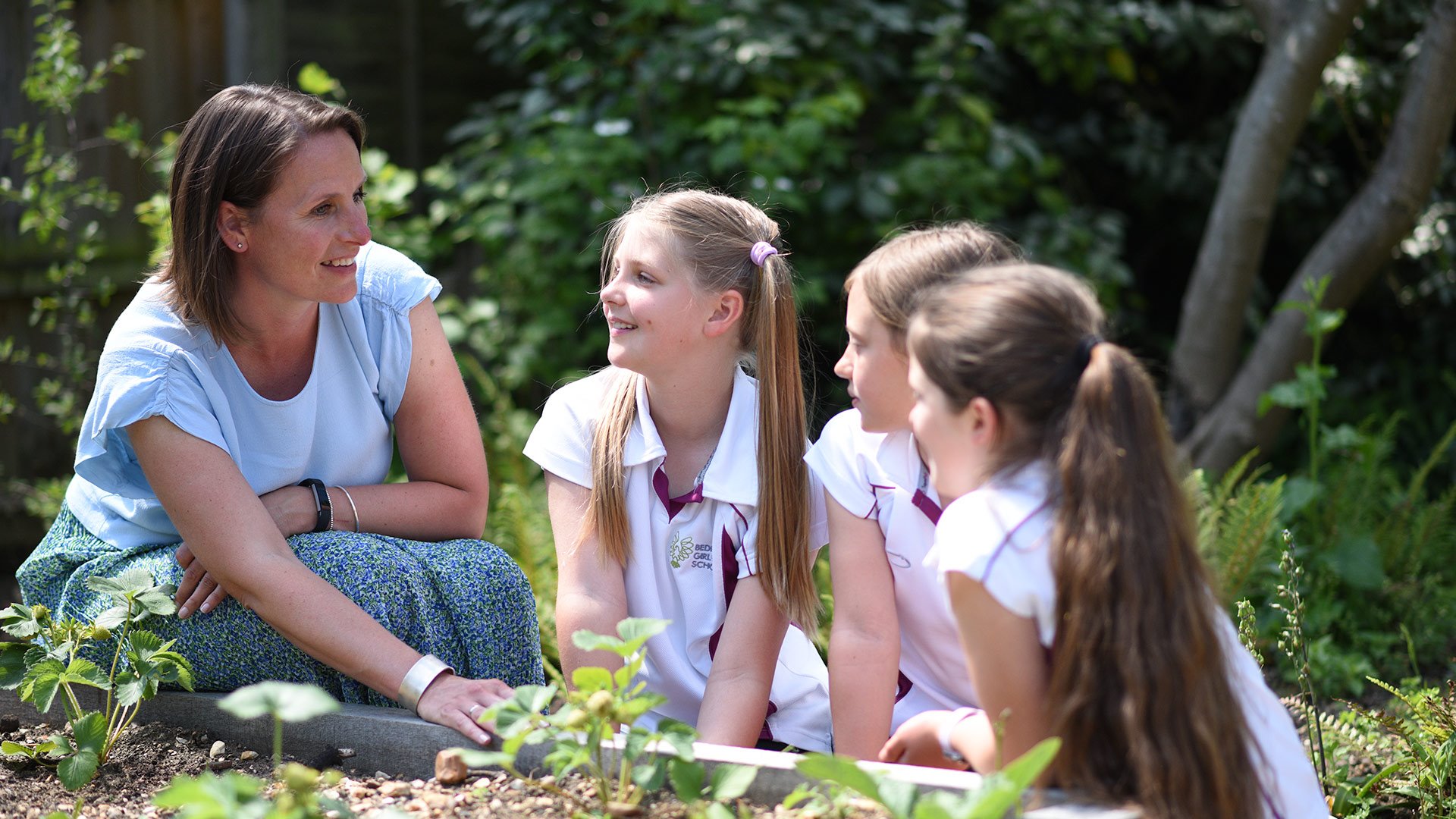
Working closely with the Sixth Form Sustainability GLG Team, Eco Club members also design and deliver their own activities to raise awareness and spark interest in sustainability. They lead assemblies, share practical guidance on reducing waste and energy use, and model positive environmental behaviours. Importantly, their work extends beyond awareness into action: pupils take part in regular litter picking and actively tend to the Junior School garden, helping to create greener spaces and fostering a strong sense of responsibility for our shared environment.
Our School Eco Council is a truly student-led body, made up of committed pupils from Years 3 to 13 who apply for the opportunity to represent their peers. Meeting half-termly and supported by members of staff, the Council works collaboratively to shape strategy and identify meaningful, practical action within our school community. This cross-phase approach ensures that pupil voice is central to our sustainability journey, with ideas and perspectives shared from Junior through to Sixth Form.
The Eco Council is a dedicated and forward-thinking team that has driven initiatives ranging from reviewing and reducing plastic use to leading sustainability-focused projects across the school. In doing so, students develop valuable skills in strategic thinking, planning and implementation, learning how to turn ideas into tangible change. As ambassadors for sustainability, they take the lead on the issues that matter most to them and their fellow students, inspiring others and modelling what it means to be proactive, responsible changemakers.
Our wildlife area at Cople Fields continues to evolve as a thriving habitat that supports local biodiversity and provides rich opportunities for environmental learning. We have recently introduced several hibernacula to create safe winter shelter for frogs, toads and newts, further strengthening the site as a haven for amphibians. Alongside our established ponds, which attract a variety of birds and other wildlife, these developments enhance the ecological diversity of the area and reflect our commitment to creating and protecting natural habitats within our school facilities.
Our BGS Community Orchard, which began with the planting of 50 pear, plum and apple trees, has continued to flourish and expand. Through additional hedgerow, shrub and tree planting - supported in part by our Eco Club’s successful application to the Woodland Trust’s ‘Free Trees for Schools’ programme - the site has grown into a diverse and sustainable green space. In addition to fruit trees, we have planted native species including Silver Birch, Common Oak, Rowan, Hazel, Hawthorn and Blackthorn, strengthening local ecosystems while creating a lasting environmental legacy for future generations.
We are fully committed to embedding sustainable solutions across every aspect of school life, including the management and development of our facilities. In recent years, we have installed energy-efficient LED lighting throughout the entire school site, including the floodlights on our astro, significantly reducing our energy consumption and environmental impact. We have also upgraded and replaced boilers to improve overall energy efficiency, ensuring that our infrastructure supports our long-term sustainability goals.
Our commitment extends to the smaller, everyday choices that collectively make a meaningful difference. In our toilet facilities, we use sustainable sanitary disposal resources made from renewable materials and designed to reduce pollution. By continually reviewing and improving our systems and practices, we aim to model responsible environmental stewardship and demonstrate to our students that sustainability is not an initiative, but a core value that informs decision-making across our whole school community.
Our tuck shop has reduced its plastic bottle consumption by 90% by offering options that students can buy using their own reusable bottles such as a cordial pump station. We are constantly renewing our offering and reviewing how we can reduce our single use packaging further.
We are continually looking for ways to reduce our environmental impact and build on the sustainable practices already in place across our catering service.
A key focus is monitoring food waste across our kitchens and dining spaces. By understanding what is wasted and where, we can make informed decisions to reduce waste, save resources and improve our menus.
Small changes are already making a difference. Keeping the skins on our roast potatoes, for example, adds flavour and crispiness while reducing peelings. We are also exploring national programmes such as Guardians of Grub to help embed best practice across our kitchens.
Education remains central to our plans. Working with suppliers, we will organise field trips to local farms and wholesalers, giving students first-hand insight into how food is grown, prepared and distributed. Students will then help prepare ingredients for our lunch service, deepening their understanding of the value of food and the importance of minimising waste.